


Edward Bernays: the father of marketing psychology
This article looks at a historical figure behind many of the basic principles of today’s advertising and PR – and shows where his methods work, where they were ethically questionable and which of them can still be used with a clear conscience today.
Key points at a glance
Edward Bernays (1891–1995) is regarded as the founder of modern public relations and one of the first people to base advertising deliberately on psychology rather than on product information alone. As Sigmund Freud’s nephew, he applied insights into unconscious desires and group behaviour to campaigns for cigarettes, bacon and even political upheaval. His books Crystallizing Public Opinion (1923) and Propaganda (1928) still shape how we think about the formation of public opinion. His methods show vividly how strongly identity, authority and staging steer buying decisions – and serve as a warning of the point where influence tips over into manipulation.
Who was Edward Bernays?
Edward Bernays was born in Vienna in 1891 and moved to New York with his family as a small child. After studying agriculture, he found his way into public relations more or less by chance, through press work for theatre and music events. During the First World War he worked for the US Committee on Public Information, which was set up to build public support for America’s involvement in the war. This experience – that public opinion can be shaped deliberately – became the foundation of his entire later career.
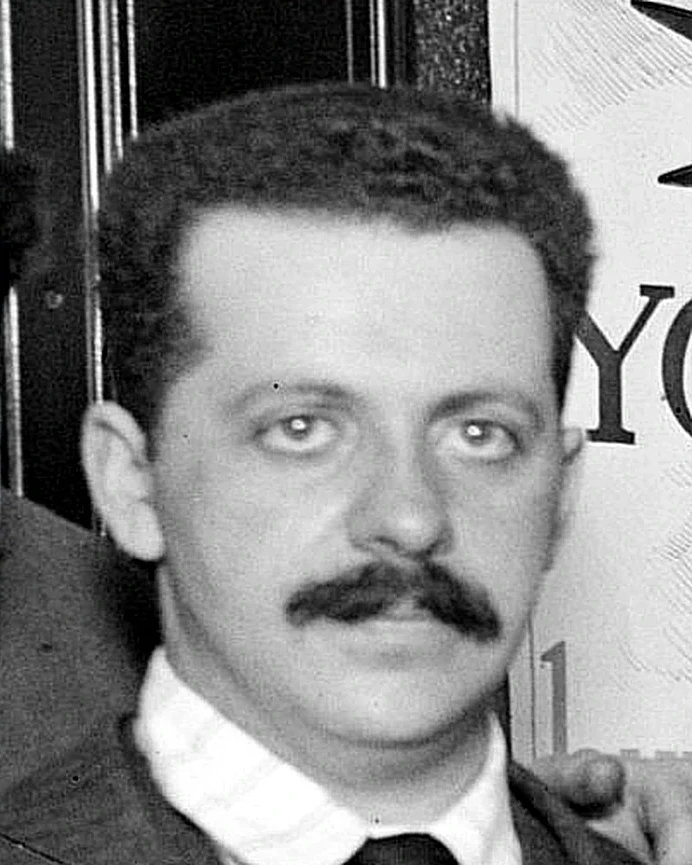
After the war, the word “propaganda” had acquired negative connotations. Bernays therefore described his work with the more neutral term “public relations counsel” and established PR as a profession in its own right – with its own theory, its own methods and its own university courses, which he helped to shape. Over the following decades he advised large companies such as the American Tobacco Company, Procter & Gamble and General Electric, as well as US government agencies.
The connection to Sigmund Freud
Bernays was related to Sigmund Freud twice over: his mother, Anna, was Freud’s sister, and his father, Ely, was the brother of Freud’s wife, Martha. He read Freud’s work closely and drew a conclusion from it that was radical for the advertising of the time: people make decisions less often for rational reasons than out of unconscious desires, fears and the need to belong. For Bernays, promoting a product therefore did not mean listing facts, but linking it with a feeling, an identity or a social movement.
He combined Freud’s theory of drives with the crowd psychology of Gustave Le Bon and Wilfred Trotter, who had described how individuals adapt their behaviour to that of the group. For Bernays the logical consequence was clear: whoever wins over a group, or an authority that is seen as independent, achieves more than any direct advertising message.
His most important books
Bernays was not only a practitioner but also a theorist. Three of his works are still regarded as foundational texts of PR and communication studies:
- Crystallizing Public Opinion (1923). The first book to describe PR as a discipline in its own right that can be taught – with methods for deliberately shaping the climate of opinion instead of merely reporting on it.
- Propaganda (1928). His best-known work. In it, Bernays openly describes how a small group of people can steer the opinions and habits of the masses – a practice he justifies as a necessary part of modern, complex societies.
- The Engineering of Consent (1947). A later essay, expanded into a book of the same name in 1955, that sums up his approach more methodically and explicitly presents PR as an applied technique for “engineering” consent.
Propaganda in particular is still quoted today – not least because Bernays wrote sentences in it that were far ahead of their time: “The conscious and intelligent manipulation of the organized habits and opinions of the masses is an important element in democratic society.” In the US the book is now in the public domain, and digitised full-text editions are freely available online.
We are governed, our minds are molded, our tastes formed, our ideas suggested, largely by men we have never heard of.

His best-known campaigns
Theory alone would not have made Bernays famous – what mattered were his campaigns, which are still taught as case studies today:
- “Torches of Freedom” (1929). For the cigarette brand Lucky Strike, Bernays had young women conspicuously light cigarettes during New York’s Easter Parade – staged as a spontaneous gesture for women’s equality. At the time, smoking in public was socially frowned upon for women; Bernays linked the cigarette with female self-determination and opened up a huge new market for the tobacco industry.
- The “bacon and eggs” breakfast (1920s). On behalf of the Beech-Nut Packing Company, Bernays had doctors asked whether a hearty breakfast was healthier than a light one – and published their agreement in the press. In this way bacon and eggs became the seemingly doctor-recommended standard American breakfast, without Beech-Nut ever having to advertise it openly.
- “Light’s Golden Jubilee” (1929). For General Electric, Bernays organised a nationwide celebration of the 50th anniversary of Edison’s light bulb, including a re-enactment of the invention with Edison himself and President Hoover as guest of honour – a huge, seemingly non-political public celebration that in reality showed the electrical industry in the best possible light.
- Green packaging for Lucky Strike (1934). When American Tobacco did not want to change the green colour of its packs, Bernays simply had green declared the fashionable colour of the season – with green balls, green fashion shows and prominent society women lending their support.
The common pattern: Bernays rarely advertised a product directly. Instead he created events, studies or seemingly independent third parties (doctors, fashion designers, citizens’ committees) that carried his message more credibly than an advertisement ever could.
Criticism and ethical questions
Bernays’ work remains controversial to this day – and for good reasons. The “Torches of Freedom” campaign used a genuine social cause to sell a product that damages health, at a time when doctors were already warning about the risks of smoking. The bacon-and-eggs campaign shows how easily seemingly neutral “studies” can be exploited for commercial purposes – a method now known as astroturfing and shunned in most reputable industries. And in the 1950s, Bernays advised the United Fruit Company on a PR campaign against the Guatemalan government that helped to create the political climate for the CIA-backed coup of 1954.
These cases are why his work is usually treated with caution in the specialist literature: the same psychological mechanisms that can build trust can also be misused to move people against their own interests. It is precisely this tension that still makes Bernays a compulsory topic in marketing education – as a warning as much as a toolbox.
What businesses can learn from him today
Most of the principles behind Bernays’ campaigns are not problematic in themselves – what matters is how you use them. Four lessons apply to a reputable small or medium-sized business too:
- People buy identity, not just products. Communication that shows what a company stands for is more effective than a mere list of services – as long as the promise is honestly kept.
- Credible third parties are more convincing than self-promotion. Genuine customer reviews, case studies and recommendations persuade today for the same reason as Bernays’ doctor surveys – only without the deception, provided they are truly independent and truthful. More on this in our article on the sales funnel.
- Events attract more attention than ads. A well-told campaign, a real event or a relatable story spreads organically – a principle our content strategies also use, just without staging fake spontaneity.
- Transparency is now a must, not an optional extra. What passed as clever PR in 1929 would today often break the rules on labelling advertising or put a company’s reputation at risk. Sustainable marketing psychology persuades without deceiving.
Bernays showed how powerful psychology can be in marketing. Whether that power benefits a business in the long run depends on whether it is built on a real promise or merely on staging.
Sources and further reading
A detailed biography can be found in the Wikipedia article on Edward Bernays, and background on his best-known work in the article on the book “Propaganda”. Adam Curtis’s BBC documentary series “The Century of the Self” (2002) takes a critical look at his influence.
How to build attention and trust today without relying on questionable staging is the subject of our article on AI visibility – the modern version of the question of which “independent third parties” people trust.